Should I Be Genuine When I'm A Hot Mess?
Posted by Lissa Carter, LPC
You know the story, right? Perhaps you’ve spent the year visiting your therapist weekly, learning new ways of communicating. Perhaps you’ve developed a mindfulness practice, or spent every morning this past month writing down what you are grateful for. Perhaps you’ve found a new community in which you can really feel appreciated for your genuine self.

…And then you visit your family, and it all goes up in smoke.

This time of year, we all face our own challenges. For some of us, it is talking honestly with family who sit on the other side of the political arena. For some, it is the loneliness of not having a family at all, having lost family members who were dear to us, or having a family who has forsaken us. And for some, it is the stress of maintaining our own values in the face of an onslaught of social responsibilities and expectations—-or our sobriety in the face of a slew of temptations.
Let’s not dance around it: this is a rough time of year. And to make matters worse, there’s this expectation that we are supposed to be having the TIME OF OUR LIVES….and it really seems like everyone else truly is!
So let’s slow this train down and take a look at what it might feel like to exercise authenticity and self-compassion around the holidays.
Here is your four-step guide to being genuine when you are feeling like a hot mess.
1) Setting the Stage for Authenticity
As you’ve probably noticed, there’s more than one version of yourself living in your body. There’s the wise self that knows what truly matters and puts that first. There’s the hurt, wounded self that lashes out when you’ve had a rough day. There’s the veneer you smooth on when you have an important meeting at work, or need to turn on the charm.
When we talk about authenticity, it is extremely important to name WHICH ASPECT of yourself you want to be authentic to. Does any of this sound familiar?
“I know I committed to working out this evening, but I had a rough day and I’m really tired. I need to honor my need for rest.”
“I did say that I wasn’t going to have more than one drink, but this conversation really is insufferable and I deserve a little help in getting through it.”
“I know you’re hurt, but I am furious right now. I need to be authentic and tell you all the ways that you are wrong.”
It’s crucial to be honest with ourselves, first and foremost. Are we choosing to be authentic to the BEST version of ourselves, the one that aligns with our values? Or are we choosing to be authentic to the wounded part of ourselves and let it have control over our choices and relationships?
Steven Hayes, cofounder of ACT therapy, posed a question in a recent training that has lingered with me. “Suffering is going to show up,” he said. “It does not invalidate the pain we are feeling to ask ourselves what do I want to be about, even in the face of this suffering?”
What do I want to be about, even in the face of this suffering?
In other words, to whom do you want to be authentic? Which part of you is most deserving of your loyalty?
Take a little time, right now, to write out how you want to be, even when you are falling apart. Who do you want to be when you are having a difficult conversation? Who do you want to be when you have to do something you dislike?
2) Front-Loading with Self-Compassion
So, while we’re being all authentic, let me ask you: why are we always trying to slide out of our values and commitments? Why do we go out for dinner when we are trying to save money? Why do we say yes to a day of binge-watching a new show when we said we’d spend the weekend working on that book we always said we’d write? (Oh, just me?)
We’re not bad people. And we’re not lying to ourselves—-we truly do want to keep those commitments. It’s just that it’s really hard, because the payoff is in the future and the sacrifice is in the present moment.
Let me say that again: these tender animal bodies of ours HATE feeling discomfort in the present because the future payoff doesn’t feel as real as the present pain.
So the kindest, most helpful thing we can do for ourselves is to make these changes as gently and lovingly as possible. When that harsh critical voice shows up, telling you all the ways you are flawed, don’t side against yourself. Wrap a warm arm around your tender self and say “this is really hard. I want the best for you, and I know change is scary.”
Bring a little payoff into the present by being your own compassionate cheerleader. We are much more likely to stay the course if our inner voice is telling us “This is hard, I know. I’m sorry. And I think we’ve got this.”
3) Befriending Our Own Experience
Just as you did in step one, take a moment here to set an intention for yourself:
No matter what happens, I refuse to make an enemy of my experience.
Read that over a few times, and speak it quietly to yourself. What would it mean, if you were committed to befriending your own experience? What would it mean if, when your feelings are horribly hurt over the dinner table, or you feel a simmering resentment over the way you are being treated, you tell yourself:
“Wow, I am feeling so hurt right now. Where is that pain hitting me? What can I do to support myself through this?”
instead of:
“Keep it together, you idiot! Grit your teeth and smile! Geez, you’re playing into their hands!”
or even, more subtly:
“Oh no! It’s happening again! No no no no no no I SO wanted it to be different this year!”
The first response befriends reality. The second one fights it, and the third one flees it.
But no matter how you treat reality, it’s still reality.
We don’t have a lot of control over the things that happen to us, or over the thoughts and feelings we have in response. What we DO have control over is how we act on those thoughts and feelings. Make the commitment to yourself that your actions will befriend the reality of your experience, rather than arguing with or avoiding it.
Perhaps this means that when overwhelming grief shows up in the middle of an event you hoped would feel inspirational, you let yourself feel fully overcome with grief and ask “what might this grief be inspiring me to do?”
Perhaps this means that when rage shows up at a time you hoped to feel calm, you allow yourself to ask “how might allowing myself the full experience of this rage burn away some obstacles to my ability to feel calm?” Allow yourself to hold the possibility that you can have the reality of your experience AND move toward your values, at the same time.
4) Permission to Pause
Want to know the best thing about being a hot mess? It’s time-limited!
Our nervous systems are designed that way. Full freak-out is too energy-intensive to maintain for very long, so our nervous systems are constantly working to re-regulate.
If you are truly feeling triggered, and even your best attempts at staying authentic to your best self, being self-compassionate, and befriending reality are falling short, please know that you are worthy of a pause.
You always, always, always get to call a time out when you need one.
It might look like excusing yourself to the bathroom to take 5 deep breaths on the toilet seat, or it might look like taking a short walk, making some time to write, or even texting a friend. The truth is, we cannot think rationally when our nervous systems are in fight-or-flight mode, so any time we take to soothe and calm ourselves will only benefit us in the long run. Walk away, review the first three steps of this process, and return when you feel like your best self is back in charge.

So…..should you be genuine when you are a hot mess?
A RESOUNDING YES. Because if you are only allowed to be yourself when you are feeling calm and regulated, you are going to miss out on a LOT of life!
______________________________________________________________________________
As always, we love to hear from you! Feel free to comment below or write us directly at innerlightasheville@gmail.com.
When is it bad to feel good?
Posted by Lissa Carter, LPCA
I have a new client. He is NOT feeling the mindfulness practice. In our last session, when I asked him if he’d like to take a few moments to breathe quietly and check in with his inward landscape, he went along with it, but I could tell it was a struggle—heavy sighs, eye rolling, squirming. I asked him about it afterward.
“The thing is,” he told me, “I know a lot of people who are really into this. And it’s just not real life. You don’t get to just check out and hum when things get real. And I’ve watched some of my friends just refuse to interact with the real world, they just go off and meditate or do yoga and disappear when things get tough. I’m not interested in being like that.”

Do you know anyone like that? Anyone who uses meditation or mindfulness or chanting or yoga or self-care or self-compassion as a way of avoiding life? Anyone who has used spiritual bypassing to duck out of difficult conversations?
OH MY GOODNESS ME TOO. Her name is ME. But I’m working on it.
When I was first introduced to meditation, it felt like water in the desert. I practiced ALL the time. I murmured mantras on my way to work and practiced deep breathing exercises in the bathroom. When friends or family complained to me I would breathe in light and breathe out compassion, so I could rise above the problem. When hard conversations or difficult feedback landed in my lap, I would go shut the door and meditate until I felt good again.

Yeah, I entirely missed the point.
The point of mindfulness isn’t to feel good all the time. We don’t meditate to avoid life, but to be more present to it. The practice of meditation is not intended to keep you in a state of bliss.
I shared this with my client, and he nodded.
“Well why do you still do it then?”
Here’s what I explained to my client:
Imagine that right before an important meeting at work, a close friend calls and reminds you that you flaked out on meeting her last night and her feelings are hurt. She tells you that you are insensitive and that she wishes you would be more considerate in future.

You don’t have time to explain yourself or even apologize the way you would like to before you have to rush off to the meeting. You are feeling emotional and completely distracted by this unexpected feedback. Your mind races, sorting through multiple experiences in the past and present, looking for evidence of thoughtlessness and insensitivity, then rapidly changes gears, trying to find proof for the counterargument that you are actually a highly thoughtful and sensitive person.
How do you think you are going to perform at that meeting?
~~~
One of the unexpected drawbacks we humans unleashed upon ourselves when we developed language is the ability to cycle a feeling of threat from the past into the present and the future. By thinking about a negative experience in the past and giving language and interpretation to it, we can cycle that experience of threat forward from the amygdala (where emotions are designed to last no longer than a few moments) into the prefrontal cortex, where we can ponder and interpret, generating all kinds of new and prolonged emotional experiences in the limbic system, which we then pull into the prefrontal cortex again, ad infinitum.

We do this threat-cycling for a simple reason: to prevent the threat from happening again. We think, if we can analyze the experience and understand why it happened, we may be able to avoid similar experiences in the future.
Great! Except… it doesn’t work.
When we experience a threat, whether it is a threat to our most valuable relationships or a threat to our livelihood, that feeling generates very specific physiological responses in the body that make it extremely difficult to attend to anything other than the threat. This happens for a reason: it serves our survival to pay attention to something that threatens us!
But…we do not do our best thinking at these times.
Coming back to the story of the meeting, chances are you are not going to be able to concentrate in there. You’ve brought an imaginary threat into the room---the feedback you got from your friend—and, ironically, it will probably keep you from being thoughtful and sensitive during the meeting. So, if the point was to solve the problem by analyzing it, threat-cycling did just the opposite and guided you into repeating the behavior you were hoping to avoid!
This is exactly where mindfulness shines.
Not to help you avoid that feedback from your friend and meditate until you are convinced you are a good person again. Not to take deep breaths and “transcend” the conversation.
Rather, a mindfulness practice can help you soothe the nervous system enough to get your intelligence back on line in time for the meeting, to be present moment by moment in that meeting while compassionately noticing the emotions that arise from the phone call, and then to kindly, courageously, and intelligently decide how your best self wants to respond to your friend.
From a calm place, our full intelligence is available, and we are better able to see the broader patterns of cause and effect. We can get that languaging brain on our side and use it to imagine how we would like to respond to situations like this in the future.
This is why we practice mindfulness all the time. Not to avoid real life, not to bliss out, but to build the muscle of a flexible mind so that when we need to react from our full intelligence, it is available to us.
~~~
My client took this in quietly and thought about it. “But do you get people using it the other way? To check out?”
“I think most of us fall to one side or the other, most of the time,” I said. “We are either actively avoiding negative feelings, painful situations, and people who force us to face uncomfortable truths about ourselves, or we are punishing ourselves with those very things, pushing away the good and comfortable and enjoyable experiences in our lives from a sense that we don’t deserve good things because there are parts of us that are not yet perfect.

Mindfulness is that balancing point, the middle ground between those two reactions that allows us to stay in the present moment and make decisions from compassion instead of avoidance or punishment.”
“I do that other one all the time!” he said. “I feel like I’m wrong to be happy if my wife is sad. Or to have a good day if my son is mad at me.”
Sound familiar?
It is so hard to find that middle ground, that flexible-brain response. It’s so hard to get the languaging brain to drop that threat-cycle bone it’s been chewing on for a decade and help you to imagine what you’d like to do instead.
So in those moments when you feel you are not acting from your best self, take a little time to close your eyes and breathe. Imagine a wise, kind version of yourself wrapping an arm of compassion around you.
Then look honestly at your behaviors. Are you avoiding something, or are you punishing yourself? How would your best self like to respond in this moment?

The full exercise, which I’ve borrowed and adapted from Compassion-Focused Therapy, is downloadable below.
If you find it hard to imagine feeling calm when someone is mad at you, or facing criticism without beating yourself up, you just might benefit from taking the time to complete the whole thing!
As always, we love to hear from you if you want to drop us a line at innerlightasheville@gmail.com or comment below. And if you need a little help navigating this middle ground of mindful self-compassion, Maeve's 6-week meditation course is starting up next month! You can learn more or register by clicking the image below.

Thank you to my brave client for his willingness to share his story.
What is singing itself through you?
Posted by Maeve Hendrix, LPCA, RYT
In some cultures it would be common to receive medicine healing for most ailments by being asked:
When was the last time you danced?
When was the last time you sang?
When was the last time you told a story?
When was the last time you sat alone in stillness?
When you hear these questions, what comes up for you?

Our western culture does not encourage or promote these forms of expression as a way of life.
Instead, we are told that we have to be "a professional dancer" in order to dance, "a trained singer" in order to sing, "an accomplished writer/speaker" in order to tell stories.
Western, capitalistic culture is so deeply caught on the hamster wheel of doing and achieving that the mere suggestion of sitting alone in stillness can bring up feelings of panic, terror and confusion.
We shut down before we give ourselves the opportunity to tune in and see what is ripening inside of us.
Take a moment to genuine ask yourself - WHAT IF - The phrases: "I'm not a dancer, Im not an artist, Im not a singer/storyteller" did not exist in your inner dialogue?
Instead: what would it be like to offer these statements as an experiment? - "I give myself permission to express myself through dance. The world wants to hear my story. I learn about myself through art and movement and expressing my voice. I connect to myself and others through creative expression."
"I acknowledge the lifelong relationship I have with myself and honor it through quietly sitting and feeling my own presence."
These are all just examples of different conversations we could have with ourself. Rather than judging whether we are "good enough" or "up to par" in order to sing, dance, meditate, or tell stories - we might offer enough spaciousness and flexibility in our mind to let whatever is alive inside to flow out, (especially if) it's not pretty, tidy, or polished.

Tell Me, She Said
Tell me, she said:
What is the story you are telling?
What wild song is singing itself through you?
Listen:
In the silence between there is music;
In the spaces between there is story.
It is the song you are living now,
It is the story of the place where you are.
It contains the shapes of these old mountains,
The green of the rhododendron leaves.
It is happening right now in your breath,
In your heart beat still
Drumming the deeper rhythm
Beneath your cracking words.
It matters what you did this morning
And last Saturday night
And last year,
Not because you are important
But because you are in it
And it is still moving.
We are all in this story together.
Listen:
In the silence between there is music;
In the spaces between there is story.
Pay attention:
We are listening each other into being.
-Sally Atkins, Picking Clean the Bones
Inner Light Counseling Collective is dedicated to providing safe and supportive space for individuals to discover and express their inner life through voice work, storytelling, movement, writing, art and meditation. We offer playshops, retreats, and individual sessions that provide a supportive space for inner exploration and creative self expression.
We have several amazing upcoming offerings and invite you to join us or share this blog post with friends.
To Register click here


To Register click here

Friends in Low Places
Posted by Lissa Carter, LPCA
Sometimes loneliness is indestructible. Sometimes that deepest, darkest place your soul goes to feels entirely unspeakable, and you cannot find a way out to the people you love, and the people who love you cannot find a way in. Or perhaps, in those moments, there is no one you love and no one who loves you. Sometimes it feels that dark.

When the people feel too far away, sometimes the plant world can get through. The tree people are rooted and will not run away from your terror or despair. They will support you if you stretch your back against their trunks.

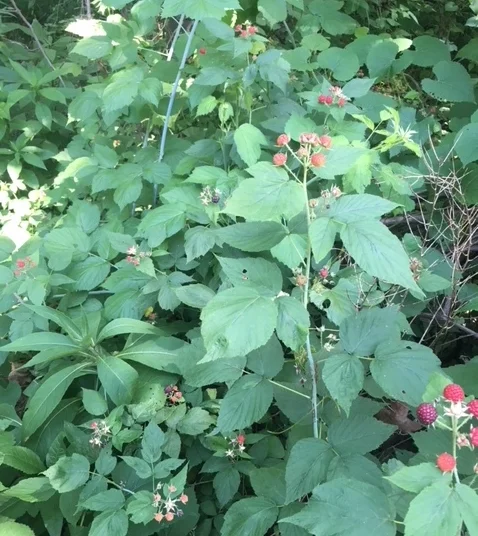
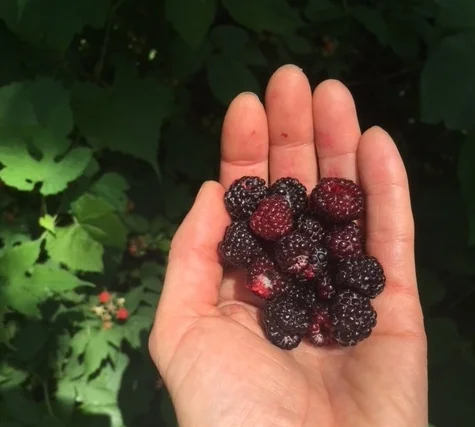
The black raspberry bushes will feed and feed and feed you and not ask for a thing. They will teach you, too, with their thorns—watch how they guard themselves even as they give. We can learn to do this too.
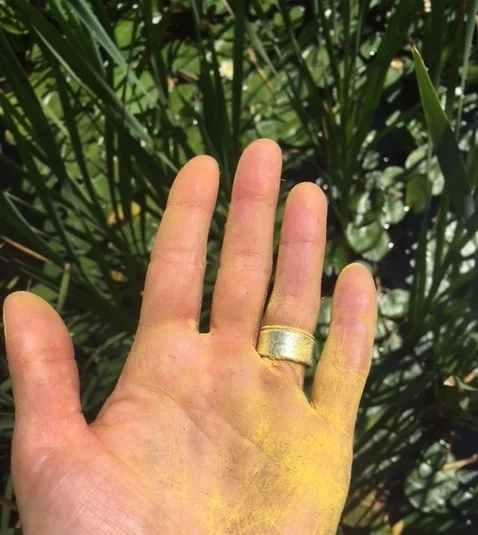
The cattail is swaying in the wind and releasing the last of its spring pollen into the air. If you take a sack and shake the pollen into it, you’ll find a generous helping of golden powder filled with micronutrients and vitamins. The cattail offers this to everyone, not just to some.

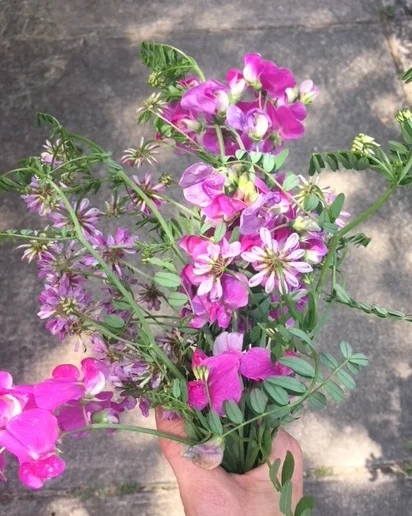
And then there are the wildflowers---sending fresh sweetness into the air, lighting up a sense of hope and possibility with their brightness.
Do not be afraid to walk out into the world of the plants. Wear sunglasses if you are afraid of running into people. The plants do not care if you are completely broken open. They can witness you without bearing any judgment at all. They can hear your weeping or your shouts of anger without intervening.
Bring your water bottle and offer a drink to the tree you lean against, the flowers you gather, the berry bushes that feed you. Feel this simple relationship start to weave you back into the world and the community of things. You are not alone. You are never alone. You are part of this world, and you belong.
For the Children
by Gary Snyder
The rising hills, the slopes,
of statistics
lie before us.
the steep climb
of everything, going up,
up, as we all
go down.
In the next century
or the one beyond that,
they say,
are valleys, pastures,
we can meet there in peace
if we make it.
To climb these coming crests
one word to you, to
you and your children:
stay together
learn the flowers
go light
We are always available for a free consultation if you need someone to talk to. Email us at innerlightasheville@gmail.com to set up a time to talk. If you are in crisis and a phone call feels too vulnerable, text Home to 741741 to text with wonderful, trained volunteers.
If you have any doubts at all about plant identification, don't consume any parts of a plant. Just sit with it and wonder about it, offer it water, and feel the oxygen it is creating for your lungs. Let it be there for you.
of loathsomeness and sovereignty
By Lissa Carter, LPCA
Do you ever find yourself contemplating your own loathsomeness?
Maybe it's just me. But there are days I find myself preoccupied with the people I have hurt, the important tasks I have bungled, the horrible mistakes I have made.

This image, by artist Juan Wijngaard, illustrates the tale of Sir Gawain and the Loathly Lady as retold by Selina Hastings
Although I know it is helpful to track the times I have gone against my own values, and to make amends for the hurt I have caused, sometimes the self-judgment spins out of control and, in a terrible irony, believing myself to be loathsome, I act out loathsomely. Oh, the high drama!
At these times, I am grateful that there is another way of relating to my regrets and mistakes.
Recently I had the great privilege of attending a myth-telling workshop and hearing Dr. Martin Shaw speak about myth and archetype. At one point, he paused in the telling of a story and said:

"In these moments in myth, when a character goes back and forth on a boat, or sews upon the same garment again and again, it implies a connection with a larger rhythm, the wax and wane of the moon or the turn of the tide. Here we see these powerful, archetypal women quilting their lives to the life of the Otherworld, attuning themselves and their small rhythms to that ongoing, luminous sacred time."
(Caveat--I'm not sure that's exactly what Martin said, but that's how I have it written in my journal! )
I've been thinking about this a great deal--the way that we can take the life we've lived and cut it apart into single incidents, try to analyze how we have behaved or what we have done as though it can be separated from the whole.
I have certainly been guilty, both as a therapist and in my personal life, of choosing to take a story to pieces rather than quilt it to the sacred.
Might there be another way of responding to our own flaws and transgressions?
Let me tell you a story...
Once, long ago, King Arthur went hunting with his men. In giving chase to a hind, he found himself alone in a dark wood, when suddenly a Dark Knight approached him.
"It is good that we have met with the arrow already flown from your fingers," said the Knight, "for I intend to kill you."
"It would be dishonourable to kill me thus, alone and unarmed in the wood," said Arthur. "Will you not reconsider?"
"If you can return here in a year and a day with the answer to my riddle, I will spare your life," said the Dark Knight. "But if you fail to answer it correctly, I will kill you where you stand."
Arthur agreed to this proposal and stood to hear the riddle. The Dark Knight leaned close and whispered it mockingly into his ear:
"What does a woman truly want?"
Arthur rode joyfully back to his men, sure that he could easily gain the answer to this riddle by asking his Queen. But when he told his friends of his adventure, all of them had a different answer to the riddle, and each was sure that his answer was correct.
Gawain, Arthur's most honorable Knight, proposed that they ride across the kingdom, asking every woman they encountered what it was that she truly wanted. Arthur agreed, and they set out at once.

But a year and many weary miles later, the two Knights had discovered that each woman wanted something different from the others, and each was sure that her answer was the true one.
Exhausted and downhearted, Arthur began his journey toward the assigned meeting spot and what he knew must be his death. Suddenly his horse reared, and there in the path stood a loathly lady, hunched and wizened and rheumy-eyed, covered in boils and pus. She gentled his horse and told him that she could answer his riddle and spare his life, at a price: she must be given Gawain as her husband.
The King shuddered at this, but Gawain, riding just behind Arthur, did not hesitate for a moment. He dismounted, and with grave courtesy proposed to the loathly lady.
She gazed at him for a moment, then took his hand, and in her gravelly, broken voice slowly pronounced the answer to the riddle:
"What a woman truly wants is sovereignty."
Hearing this, Arthur knew it at once for the truth, and when he spoke it to the Dark Knight, he too knew at once he was defeated. Roaring in rage, he disappeared, sparing the King's life.
Gawain and the loathly lady were married in great pomp, and despite the lady's appalling lack of manners at dinner and undeniable stench, Gawain treated her with the utmost love and courtesy. When they retired to his bedchamber, she asked him to kiss her, and he did so without flinching.
When next he looked upon her, he saw a woman of undeniable beauty. Astonished, he asked her what she had done to his wife. She answered:
"The Dark Knight cursed me, for I would not give him the lands that were mine by right. Now that you have wed me, you can break this curse, but you must choose: Will you have me loathsome by day, and beautiful by night when I am yours alone? Or will you have me beautiful by day for all to look upon, and loathsome by night when darkness hides me from all but you?"
Gawain looked upon the lady and considered this, and then, with the honor and wisdom for which generations have remembered him, said to her:
"This is your life, and your choice. Tell me what you would prefer, and that is my wish."
This, of course, broke the spell forever, for he had restored to his wife her sovereignty.

With sovereignty, the loathly lady was restored to her wholeness, her natural way of being. The disguise of loathsomeness fell away.
I find myself again and again in this story. I have been the dark knight, lashing out in rage and anger when another would not give me something that I coveted. I have been Arthur, utterly confounded as I try to answer the riddle of what the people in my life want from me. I have been the loathly lady, lost in the curse of over-identification with my flaws.
I would like to learn to be Gawain.
It seems to me that if we are willing to treat our Loathly Ladies--our mistakes, our flaws, our brokennesses--with respect; if we are willing, instead of cutting them out of the tapestry of our lives, to consider quilting them onto the fabric of our larger selves, the fabric of mystery---if we grant them our time and attention, it is possible they carry great gifts for us.
For what is sovereignty, but the serene power to act and to be accountable for one's actions?
Be gentle to yourself today, and consider what wisdom your flaws and regrets are gently bringing to your awareness. How might you allow them to be a part of your story, quilted onto the larger story of your life, rather than trying always to bury and excise them?
How might you grant yourself sovereignty to act and be accountable, in all of your imperfect humanness?
We love to hear from you. Feel free to comment below, or email us your thoughts and questions at innerlightasheville@gmail.com.