What Wendell and Dolly Knew About Sanity
…especially in the face of despair
By Lissa Carter, LCMHCS
I had the opportunity to meet Wendell Berry, once.
I was studying environmental science and permaculture at the time, and had signed up to attend a farming conference. Wendell Berry was one of the featured speakers. When he took the stage, someone asked him to speak to one thing we could all do to fight the danger of climate change. He didn't answer right away, and when he did, something about his answer made me queasy. So queasy, in fact, that I didn't even write it down. (I write EVERYTHING down.)
But I do remember that his answer contradicted the question. There is no one thing, he said. That's part of the problem, that kind of thinking. You need to build a relationship with one place, and get to know it--really get to know that specific place through all its seasons and difficulties--and when you do that, that relationship to that specific place will teach you what you need to know about the living world. Then you let your action rise up out of that relationship. You need to be committed, first. Relationship is what matters. Devotion is what matters.
That answer challenged everything about the way I had been approaching my studies and my life. I wanted to escape limit, to escape responsibility, to fast forward to the good stuff where we all lived in earthen houses and ate bread baked in solar stoves that dotted terraced pollinator gardens. I loved the wild premise of permaculture design, that there are no limits to yields, only to our imaginations. We didn’t have time for long, slow commitments. The world was burning, we needed to act now! Wendell’s answer felt too much like the world I had been trying to escape, the world of tradition and responsibility.
But limit, I know now, is a function of maturity. And maturity was not something I had earned yet. When I went up to speak to Wendell Berry at the close of the conference, I had not ripened enough to know what to ask. When he asked me about myself I spouted a meaningless resume. I missed what could have been a moment of true connection.
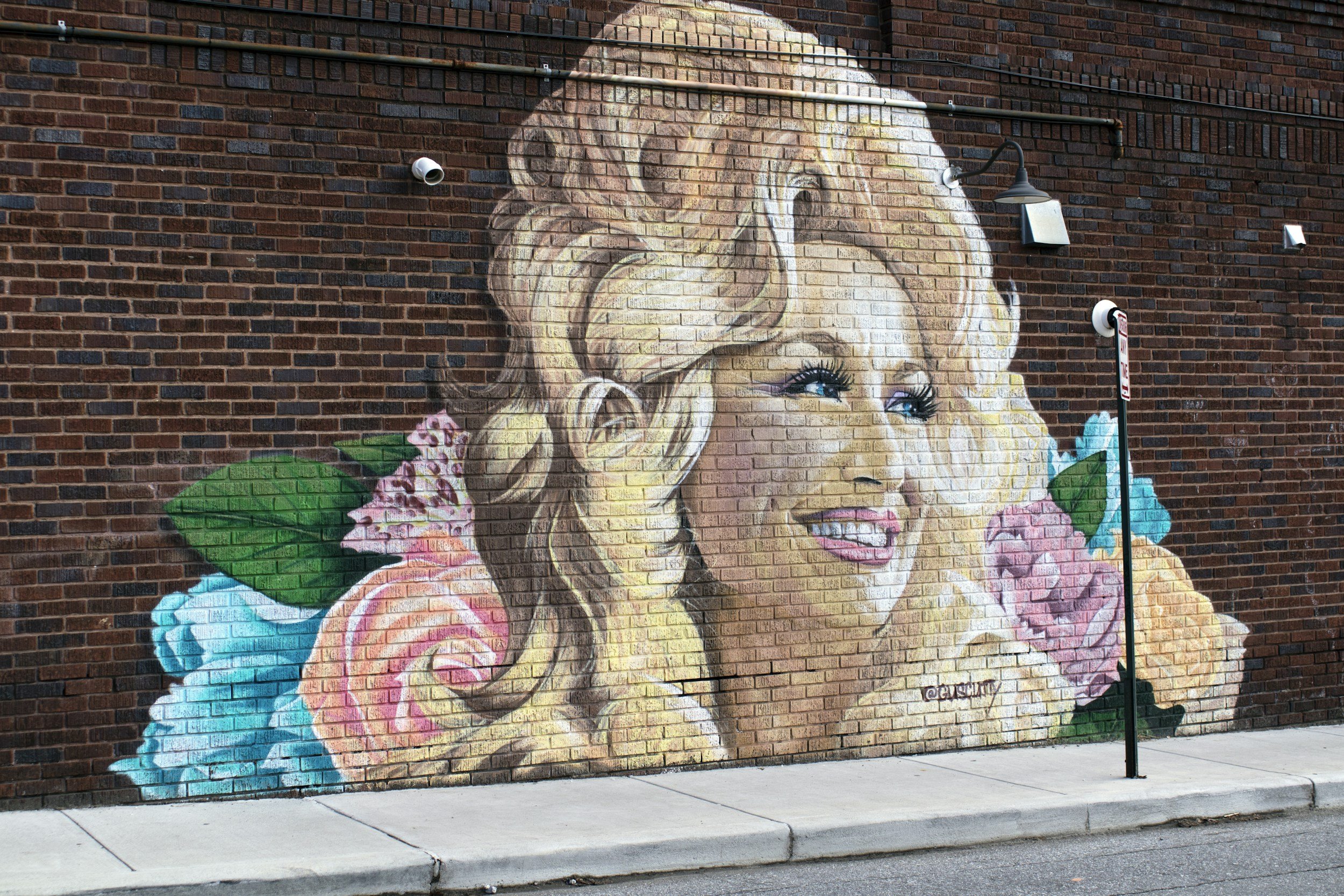
I never met Dolly Parton, but I grieved her with the same strength I felt at the news of Wendell’s passing. Yes, I live in the Appalachians, just a short drive from Dollywood, and some of the first songs I taught myself on the guitar were songs she’d written (oh the hills were alive/with wildflowers and I/was as wild, even wilder than they). But it’s more than that. Those of my clients who lost their homes or their livelihoods when Helene hit remember that Dolly Parton was one of the first to donate, and her money had few hoops or caveats. Her donation put roofs over heads and food in bellies while we were still filling out forms and waiting for the other help that eventually came.
Many of my clients feel this way, and conversations about Dolly have filled the therapy room this week. As I process these conversations it strikes me that Dolly and Wendell were saying much the same thing, in their extraordinarily different ways:
Know what you love, and love it all the way. Let your life be an expression of that love. Let your energy be used in moving toward the thing that you love, not away from the thing that you fear.
In Acceptance and Commitment therapy, we call this committed action in service to values, and it’s one of the hallmarks of mental health. What I was hearing solely as limit was also, in the other direction, exuberant love. Neither Wendell Berry nor Dolly Parton tried to be all things to all people. They devoted themselves to one thing, to one place, using their lives to explore that devotion.
Approve of yourself and your way of living so fiercely that no one’s criticism can interrupt it.
Self-approval is a form of self-compassion, which is one of the most robust skills in distress tolerance. If we can tolerate distress, we can keep moving towards our values in the face of our fears. And if outright self-approval sounds dangerous to you, remember that this principle functions in companionship with the one before. The “self” we approve of, when we are living in service to something that deeply matters, is a “self” larger than the boundaries of our own skin; it’s the self built by that relationship. Dan Siegel calls this the “mwe” way of thinking; Robin Wall Kimmerer describes it as living as though the world is a beloved relative.
Let your skills and talents and commitments be in service to this big wild love of yours. Never let it get twisted the other way around.
Iain McGilchrist’s work on brain lateralization, The Master and His Emissary, makes a compelling argument for this arrangement. McGilchrist contends that cultures in which left-brain thinking (characterized by a mechanistic and utilitarian worldview) dominates right-brain thinking (characterized by broader patterns of relational depth) experience an erosion of mental and physical health. Putting the left brain in service to the right brain, on the other hand, generates prosocial behavior and experiences such as awe and wonder.
Don’t be afraid of your own shadows and contradictions. You can be big enough to reconcile the opposites.
As Carl Jung wrote: “I’d rather be whole than good”. Or as Dolly said: “It takes a lot of money to look this cheap”. Wendell Berry did not try to write for the masses nor did he cut himself off from the world to commit himself to his smallholding. He found a way to bridge those contradictions. Dolly Parton delighted in the overblown archetype of the ultra-feminine and held her own in the traditionally masculine world of business without backing down.
Sanity, especially in the face of despair, requires all of these things. The compelling wild love, the relationship, the commitment at the heart of our lives that is so much more important than the thing that we fear. The willingness to own the complex entirety of who we are.
As Wendell told me all of those years ago, before I was ready to hear it: if we live in this way, throwing our lives behind a commitment to what we love, despair won’t claim us.
Here is his poem, The Peace of Wild Things:
When despair for the world grows in me
and I wake in the night at the least sound
in fear of what my life and my children’s lives might be,
I go and lie down where the wood drake
rests in his beauty on the water, and the great heron feeds.
I come into the peace of wild things
who do not tax their lives with forethought
of grief. I come into the presence of still water.
And I feel above me the day-blind stars
waiting with their light. For a time
I rest in the grace of the world, and am free.
May you rest in the grace of the world, Wendell and Dolly. Thank you for the abundant beauty you left us in the wake of your well-lived lives.